









Introduction
The Wild format is certainly very diverse when it comes to meta decks. As nearly all cards ever released are available (the only exception being a few banned cards), you can combine strategies from the 2010s with cards that have just come out and explore new combos and interactions.
However, we don't discuss budget lists for Wild nearly enough. Especially considering beginner players usually struggle to build a decent deck for this format because they don't have cards from older sets. To these players, investing millions or Arcane Dust into a single deck is often quite disheartening.
As such, we at Cards Realm decided to bring you three budget lists for Wild so you can start playing! However, please note that the Wild meta is... well, a bit wild and unstable, and that our goal is to show you cheap options, so these decks don't have the best win rates or play rates.
Overload Shaman

Main Strategy
As its name suggests, this deck centers around Overload cards, which are known for being quite strong for what they cost. Forked Lightning, for instance, deals 2 damage to 2 minions and costs just 1 mana, and Storm's Wrath gives your entire board +1/+1 and also costs just 1 mana. However, Overload cards also force you to lose some amount of mana - stated on each card - on the next turn.
Because of this drawback, you won't find many cards centered around this mechanic in other formats. In Wild, a few builds do see play, though! In fact, you can play Inzah in this format, a legendary minion from Festival of Legends that discounts the cost of your Overload cards by 1 less mana until the end of the game.
Another minion that adds a lot of value to this strategy is Gadgetzan Auctioneer, which draws a card whenever you cast a spell. In Overload Shaman, all Overload cards are spells, and they're already cheap on their own. Once you play Inzah, they become even cheaper. With all of these cards, you'll be able to play countless spells per turn and draw even more resources as the game goes on.
Win Condition
This list doesn't play one particular spell that stands out among the others. Instead, your main way to win is to cast an avalanche of spells as you draw more and more of them. If I had to highlight a few specific cards that will up your chances of winning, I'd certainly have to mention Inzah and Gadgetzan Auctioneer, which we already mentioned above. They'll make sure all your spells are cheap and easy to play.
As for Overload cards, the ones that deal damage to your opponent directly are Lightning Bolt and Crackle, so if you're looking for an easy way to win, it's them.
Mulligan - Opening Hand
Ideally, you should wait until Gadgetzan Auctioneer is on the board to start playing your combo. Early on, focus on removing enemy minions and drawing Inzah. I highly recommend Zap!, Forked Lightning, First Contact, and Fairy Tale Forest for your opening hand.
Just make sure you have enough mana after you play your Overload cards. Keep in mind that, ideally, you must draw and cast Inzah on turn five.
Garrote OTK Rogue
Main Strategy
Garrote changed Rogue completely when it was released in 2021 - more specifically in the United in Stormwind set. Some lists centered around this spell were meta when it was still available in Standard. Four years later, Garrote is still competitive, but now in Wild. Also, this deck doesn't play any legendary cards and plays just a few epic cards, so it's incredibly budget-friendly.
This strategy is known for two things: it can kill the opponent with a combo you play entirely in a single turn - an OTK combo, as it is popularly known - and, as a result, it is also incredibly difficult to play. You'll have to invest a lot of time learning it to win the match this way. So, let's explore how Garrote Rogue works.
Garrote deals 2 damage to the enemy hero directly and also shuffles 3 Bleeds into your deck that deal 2 more damage when drawn. This means a single copy of this spell could deal 8 damage to the opponent if you draw all the Bleeds.
This list also plays two copies of Ethereal Oracle and one of Street Trickster, which have spell damage and, as such, make a single Garrote and its Bleeds a lot more devastating.
To make sure you can play your Garrotes and spell damage minions, this list plays lots of cheap card draw. And we do mean lots.
Win Condition - How to Play the OTK?
If Street Trickster and Ethereal Oracle are on your board, and you play a single Garrote and draw all the Bleeds, you'll deal 20 damage to them directly. You can "OTK" them if you play a second Garrote or if a second Ethereal Oracle is also in play.
They're cheap cards, yes, but you'll still struggle to play them all on a single round without giving your opponent any openings. Then, you'll need a bit of luck to draw the Bleeds Garrote creates. Please remember you also have a limited amount of mana and at one point you won't have any, so you have to be careful with the two most expensive cards in this list. As incredible as this sounds, they're the key to your entire strategy.
What will win the game for you won't be just Garrote but also Swiftscale Trickster and Quasar.
This minion costs four mana and lets you play a spell for free, which may sound weird considering all your spells cost two or three mana. However, there is one particular spell you want to cast for free as soon as possible. The most expensive card in this list, Quasar, lets you shuffle your entire hand back into your deck and discounts its cost by three mana.
As this entire list, apart from the two cards above, costs three mana or less, Quasar will make many spells literally cost nothing whatsoever. And, as many of them draw more cards for you, you'll be able to draw again and again in a loop. Eventually, you'll draw all your Bleeds - and they'll deal more damage because of your spell damage minions.
This might seem confusing, so let's go over a match I played. It all starts when I play Swiftscale Trickster. Please note that you need Quasar in your hand to play Trickster for free.
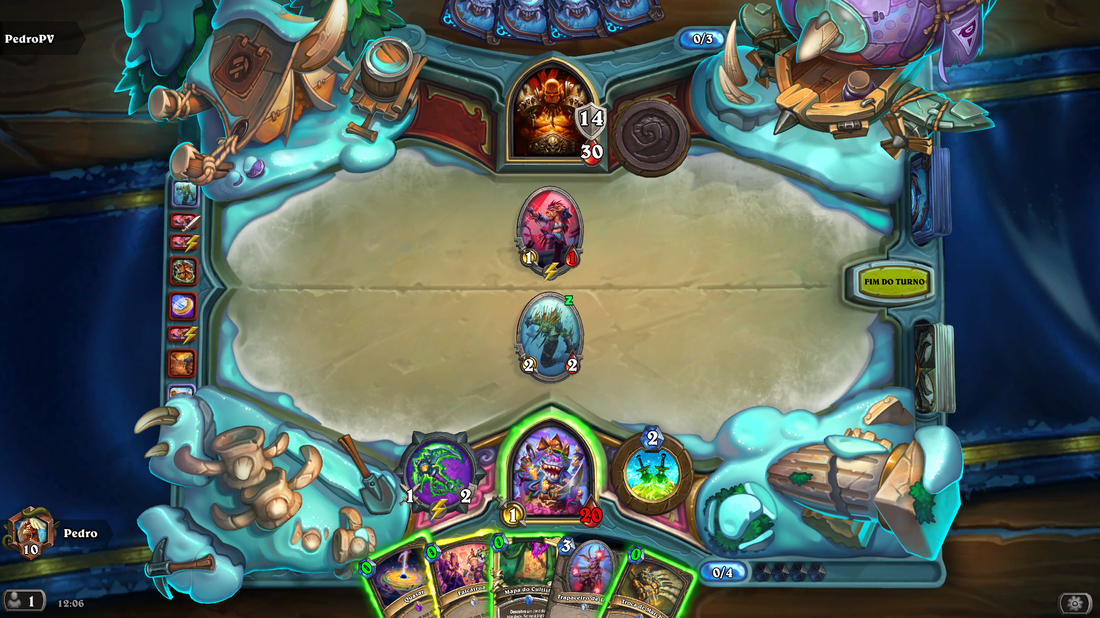
After that, I ran out of cards, but, as most cards in Garrote OTK Rogue draw other cards (including the weapon I equipped to one of my minions beforehand, in the image above), I had no trouble refilling my hand. Now, notice I could play all my cards for free.
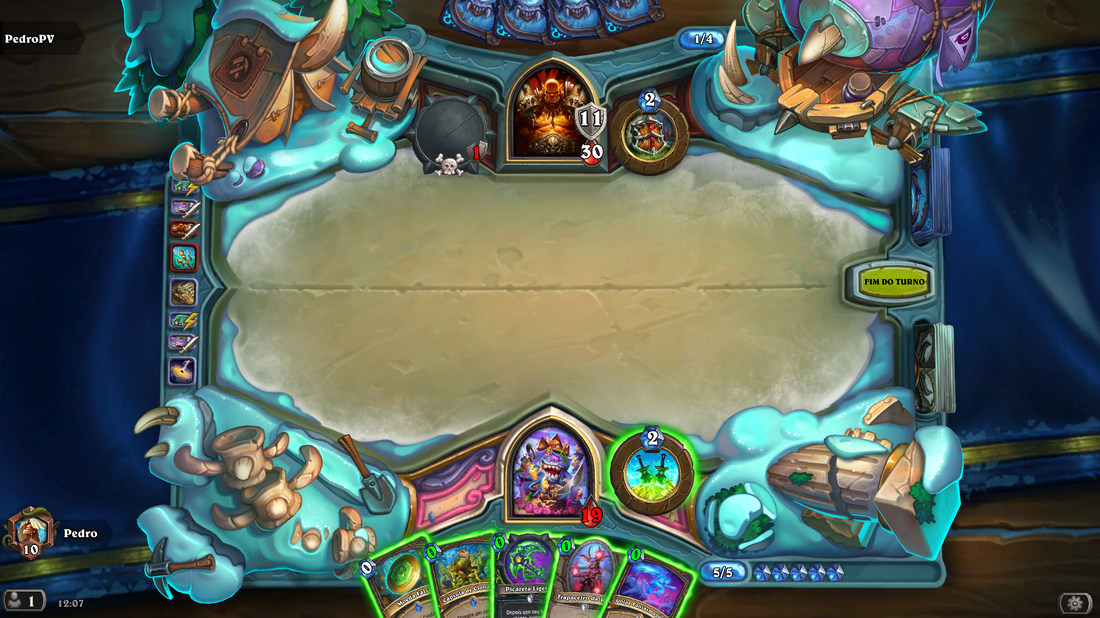
As we mentioned, you'll need to play and think fast to win with this combo. You'll still have to reactivate Knickknack Shack after you play the card you drew, and your Garrotes have a somewhat slow VFX. All of this may consume a few precious seconds in your round.
So, I couldn't win on turn 5. I just played Street Trickster then because it has a lot of life, so I believed it would survive until the next round and took the opportunity to draw a few cards and filter my deck.
On turn 6, I played my combo. I used Dig for Treasure to get the other spell damage minions and drew cards until I had all my Garrotes in hand. After that, all I had to do was cast them and keep drawing cards for free until I drew the Bleeds.
Like so, I was able to kill a Warrior, who still had all their life points and 14 armor on top of it all, all at once without giving them any time to react. That's how dangerous this deck is and how much damage it can deal at once.
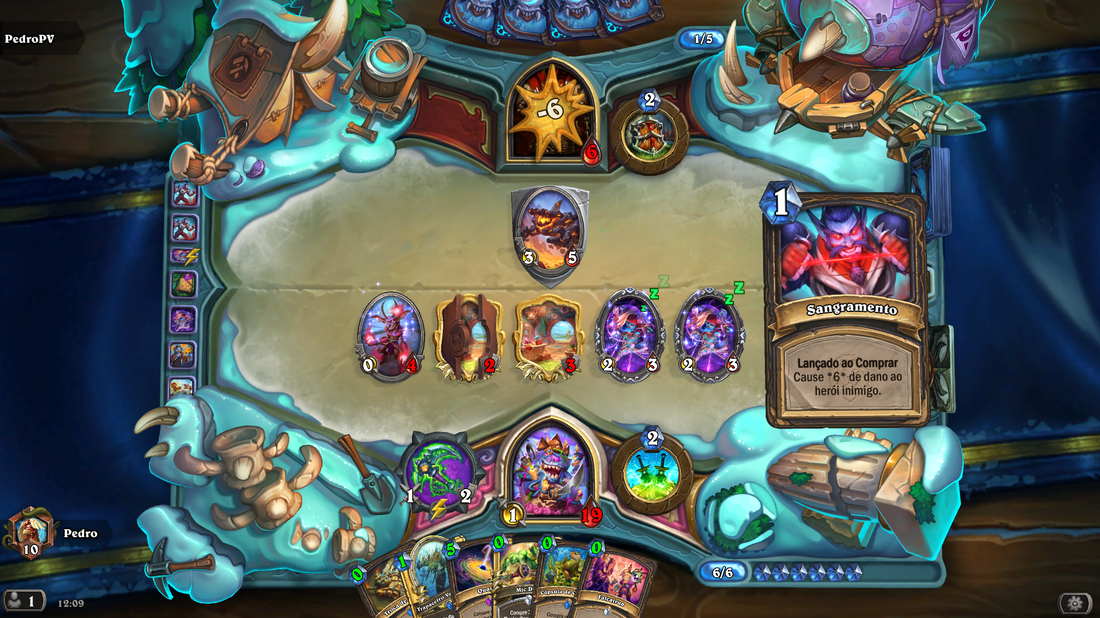
If you still need to deal some damage to finish your opponent (which will hardly ever happen), you can use Ghostly Strike and Shiv. With your spell damage minions in play, these simple spells are fatal.
Mulligan - Opening Hand
As you'll shuffle your entire hand back into your deck after you cast Quasar, don't hold on to your Garrotes or spell damage minions early on. You need to go for Swiftscale Trickster and Quasar first.
If you can't find them, keep spells like Gone Fishin' and Cultist Map. Keywords like dredge and discover won't give you completely random cards, so you'll still have somewhat of a choice when you cast them. With them, you'll be one step closer to Swiftscale Trickster and Quasar.
Another interesting card is Dig for Treasure, as it gives you a minion. You could get unlucky and draw your spell damage minions with it (which you'd rather not have this early on), but you might just get Swiftscale Trickster too.
Overall, you'll be able to draw cards in multiple ways, so not drawing Swiftscale Trickster or Quasar until turn 4 or 5 is nearly impossible. Focus on getting these cards first, as you can't really go for your Garrotes considering they'll return to your deck after you play Quasar, and Quasar is the first card you should play.
Discard Warlock
Main Strategy
Just like our first deck, Discard Warlock is simple. As its name suggests, it centers around discarding cards and, like any great budget list, only plays one legendary card (The Soularium). In any case, this card is also part of the core set, so all players already have it and don't have to spend Gold or Arcane Dust to get it.
Discarding cards, as a mechanic, usually has a drawback but also makes your cards cost less than they should - just like Overload. Dark Bargain is a great example of that. It destroys two enemy minions, regardless if they are protected by something like Elusive or Divine Shield, for just four mana, and, as such, it is way stronger than all other four-cost removals.
This deck focuses on using this mechanic to get more value instead of drawbacks. In fact, the entire deck includes cards that interact with it, so they either discard other cards or do something when they, themselves, are discarded.
Platysaur, Chamber of Viscidus, Wicked Whispers, and Soulfire discard cards.
Furthermore, some temporary card draw - like Cursed Catacombs and The Soularium - also removes cards from your hand. That's because they give you temporary resources that are discarded automatically at the end of the turn.
Now, let's go over the cards that get value out of discarding cards. Considering you'll often remove cards from your hand, this list plays Boneweb Egg, Walking Dead, Silverware Golem, Soul Barrage, and other options that create a lot of value from that.
Finally, this list also plays two minions that don't do anything when discarded and don't discard other cards. Malchezaar's Imp and Tiny Knight of Evil are better on your board, as they'll give you more value when you discard cards.
Win Condition
Your main game plan is simple. With just four mana, you can destroy two enemy minions and also summon one, like Walking Dead or Silverware Golem, which is incredible. Using Wicked Whispers to give your entire board +1/+1 and also activate a minion like Boneweb Egg at the same time is just one of the ways you can win, for instance.
Look for these small combos: they're crucial.
Mulligan - Opening Hand
It's hard to say what would be the best opening hand for this deck. It plays many cheap cards you can go for early on, but I recommend Malchezaar's Imp, as then you'll be able to get a lot of value from the very start, and Cursed Catacombs as well. If you find a minion that enters play when it is removed from your hand with Cursed Catacombs, you'll be set.
You could also go for Expired Merchant. If you manage to draw an expensive card that has a decent effect when it is discarded, like Soul Barrage, you'll be able to activate it on turn 2.
Final Words
I hope this article showed how you can build from the simplest decks to the most complex ones even if you don't have many legendary or epic cards.
What do you think? Tell us your thoughts in our comment section below.
Thank you for reading, and see you next time!









 Inicia sesión y únete a la conversación
— Comentarios 0
, Reacciones 1
Se el primero en comentar